
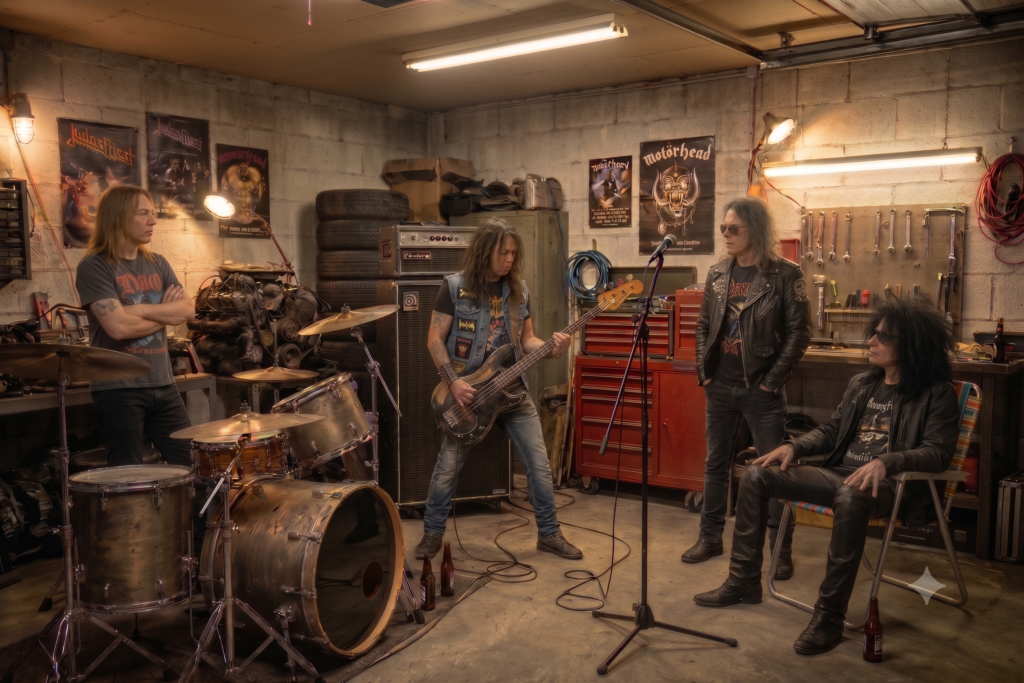
Left to Right
William Lecter, Daniel Szell, Robert Flensing, Paul Ridgway
Band Members
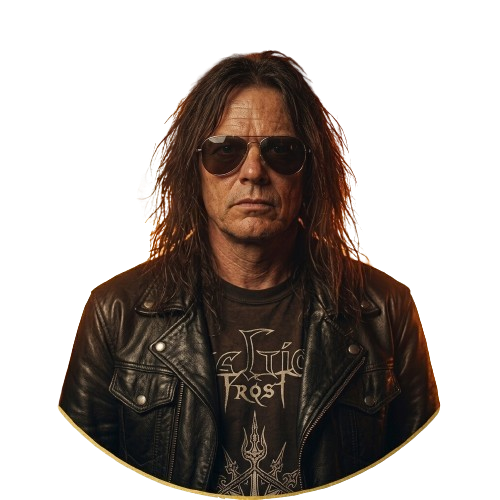
Robert Flensing (Rob)
Rhythm guitar/ Vocals
1986-
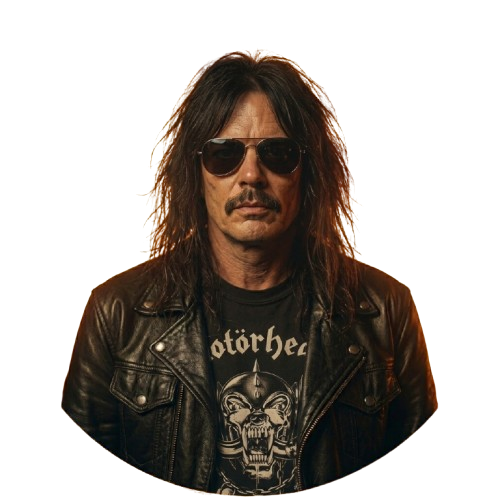
Paul Ridgway
Lead Guitar
1986-
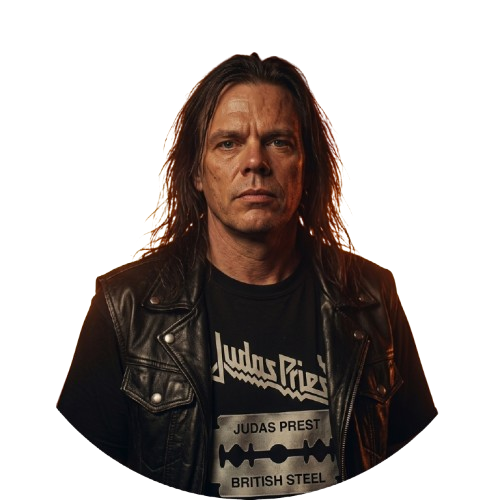
William Lecter (Billy)
Drums
1986-
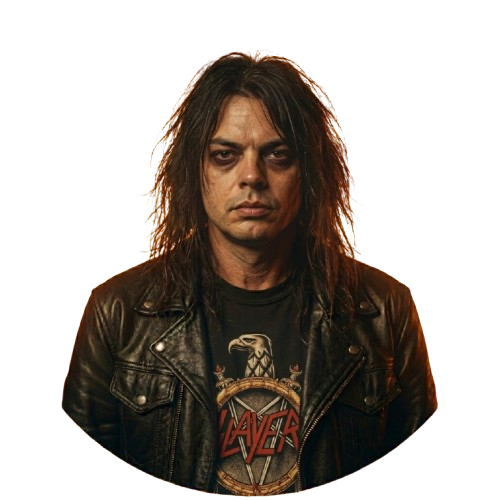
Daniel Szell (Dan)
Bass
2019-
Guest
Sophie Hudson (Sofi)
Vocals (Vomit Constellations, Mandate of Water)
2026 Total Destruction
Alex Cole (Nilo)
Vocals (Sinking Gables, River of Rot)
2026 Total Destruction
Amy Williams
Vocals (Broken Crow Throne)
2026 Monument of Rot
1986: Tape Trading and Teenage Rebellion

In the late fall of 1986, the sprawling asphalt parking lot of Oak Creek High School was a battleground of cliques. But leaning against the rusted hood of a battered Ford Pinto were three teenagers bonded by a singular obsession: the emerging, aggressive sounds of thrash metal.
William Lecter was a quiet, imposing junior with a nervous habit of constantly tapping complex paradiddles on his steering wheel. Paul Ridgway was the meticulous loner, his fingers calloused from hours of trying to replicate Kirk Hammett and Dave Mustaine solos. Robert Flensing was the wildcard—a hyperactive, charismatic kid whose booming voice could carry across a crowded cafeteria.
One afternoon, after bonding over a bootleg cassette of an underground metal show, they headed to William’s parents’ garage. William sat behind a pieced-together drum kit, Paul plugged a cheap knock-off guitar into a blown-out amp, and Robert screamed into a microphone duct-taped to a broomstand. They didn’t have a bassist, and they barely knew how to play in time, but the sheer, deafening volume was intoxicating. They called themselves Crimson Havok.
The 1990s: The Grunge Winter and the Sonic Shift
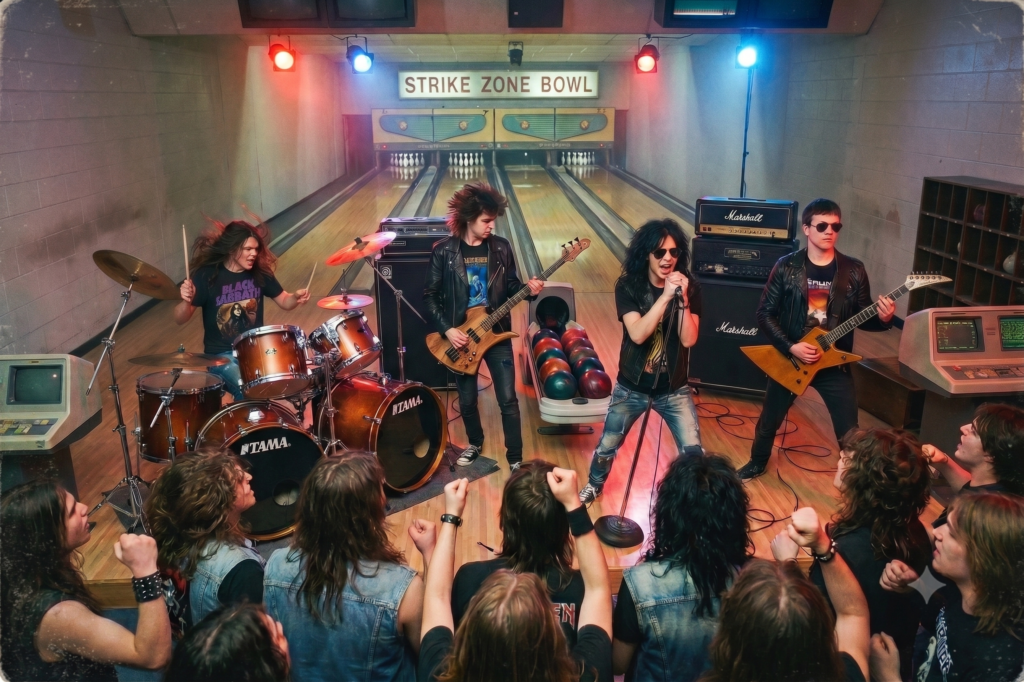
By the time the early ’90s rolled around, Crimson Havok had built a fierce local reputation. They were playing packed, sweaty VFW halls and basement dives, their sound a relentless assault of speed and aggression. However, the musical landscape was shifting. Flannel and grunge began to dominate, and traditional heavy metal was suddenly deeply out of fashion.
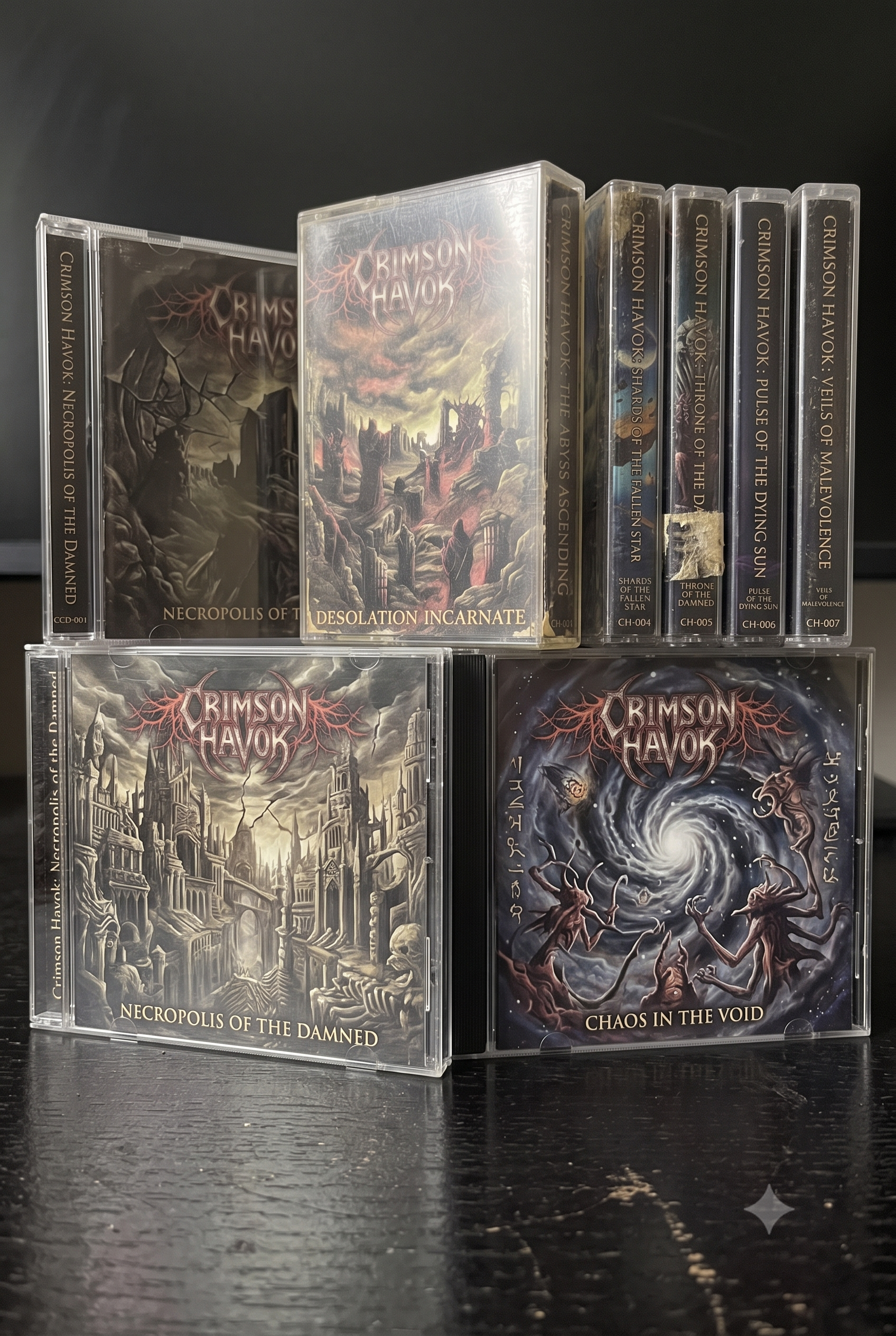
Despite never finding mainstream success, Crimson Havok steadily built a loyal underground following through a string of increasingly ambitious releases. Their raw debut, Desolation Incarnate, introduced the band’s youthful thrash roots, while Shards of the Fallen Star expanded their songwriting with darker melodies and more atmospheric compositions. As the decade wore on, Throne of the Damned captured the growing aggression of the band, paving the way for the heavier direction that would soon define them.

The Revolving Bass Door:
During this era, Crimson Havok suffered the classic “Spinal Tap” curse. They simply couldn’t keep a bass player. Some quit to join alternative rock bands, others couldn’t handle the lack of gig money, and a few simply couldn’t keep up with the furious tempos William and Paul demanded.
A New Wall of Sound:
Frustrated by the thinness of their live sound without a dedicated low-end, Robert made a crucial decision in 1997. He bought a heavy, dark-wood Gibson Explorer. Though he had never played before, Paul patiently taught him how to play rhythm. Robert learned to palm-mute and chug out power chords while simultaneously belting out vocals. This transformed Crimson Havok’s sound, turning it from a high speed thrash act into a heavier, sludgier, groove metal juggernaut that helped them weather the decade.
The first record to fully showcase Robert’s new role as rhythm guitarist was Pulse of the Dying Sun. The thicker guitar foundation transformed Crimson Havok’s sound, earning praise from longtime fans who embraced the band’s shift toward groove-laden heaviness without abandoning their thrash roots.

The 2000s & 2010s: The Grind and the Toll
As the new millennium dawned, the underground metal scene experienced a massive resurgence. Crimson Havok was finally recognized as pioneers of their local scene. They signed to a prominent indie label, bought a cramped, unreliable van, and hit the road for grueling, months long tours across the country.
Their growing reputation culminated in the release of Veils of Malevolence, widely regarded by fans as the record that cemented Crimson Havok as one of the Midwest’s most respected underground metal acts. Extensive touring followed, finally giving the band opportunities that had eluded them for nearly two decades.
However, the relentless pursuit of their dream brought severe hardships:
- Physical Breakdown (2006): William developed severe tendinitis and lower back issues from decades of playing double-kick drums on concrete floors. The band had to cancel a massive European tour, putting them in massive debt.
- Creative Clashes (2011): Tensions boiled over during the recording of Necropolis of the Damned. Paul’s desire for progressive, intricate song structures clashed fiercely with Robert’s demand for raw, punk-driven aggression. The two barely spoke outside of performances for almost an entire year.
- Battle of Tokyo (2012): Robert struggled with alcoholism, using the backstage parties to cope with the stress of writing every album. It came to a head when a fistfight broke out between Robert and Paul in a Tokyo alleyway over a botched setlist.
- Financial Ruin (2014): Shortly after completing The Abyss Ascending, their independent label unexpectedly folded, leaving the band without distribution for the new album and thousands of dollars in unrecovered recording expenses.
Despite the fights, the empty bank accounts, and the physical pain, the core trio never completely fractured. They had been through too much since 1986 to let the music die. They went back to booking their own shows and relying on a rotating cast of hired-gun bassists for tours.
2019: Fresh Blood
By 2019, Crimson Havok was a respected legacy act, but they were exhausted. The process of teaching a new temporary bassist their intricate catalog every tour cycle was draining their passion. They needed permanence.
Enter Daniel Szell.
Daniel was twenty-four years old—born a full decade after the band had formed. A music conservatory dropout and a die-hard fan of heavy metal, Daniel possessed a monstrous, finger-picking technique heavily inspired by jazz and classic death metal. When he showed up to audition at their rehearsal space, he didn’t just know the songs; he had memorized the complex tempo shifts and added a thunderous, rolling low-end that the band had been missing for over thirty years.
More importantly, Daniel brought a wide-eyed enthusiasm that served as a massive shot in the arm for the older musicians. His energy reminded William, Robert, and Paul of exactly who they were when they first stood in that high school parking lot. Daniel was immediately hired as the first official, permanent fourth member in the band’s history. With the new lineup, and fresh ideas flowing from their heads, they decided to start a new and renamed the band to Intestinal Apocalypse
2020–Present: The Second Birth
The decision to retire the Crimson Havok name was not made lightly.
For over thirty years, it had been stitched across backdrops, spray painted onto road cases, and printed on faded shirts worn by fans who had followed the band since the tape-trading era. But Robert, Paul, William, and Daniel all felt the same thing: Crimson Havok belonged to another lifetime. The music they were writing no longer sounded like a continuation—it sounded like something entirely different.
They wanted a name that reflected the ugliness, weight, and apocalyptic atmosphere of the new material.
They became Intestinal Apocalypse.
The change wasn’t about abandoning the past; it was about embracing everything the four musicians had survived. Decades of broken vans, failed labels, rotating bass players, physical injuries, and personal demons had forged a band far darker than the teenagers who once worshipped thrash metal in a suburban garage.
With Daniel contributing ideas alongside the veteran trio, songwriting took on a renewed intensity. Paul’s razor-sharp precision merged with Robert’s instinct for crushing riffs, William’s relentless drumming became even more punishing, and Daniel’s thunderous bass finally filled the sonic void the band had battled since the beginning. The result was heavier than anything they had written before—a fusion of death metal, black metal, groove, and suffocating atmosphere.
Determined never again to rely on the music industry that had repeatedly failed them, the band built everything independently. Recording sessions became late-night marathons fueled by coffee, takeout, and decades of accumulated experience. Every mix, every piece of artwork, and every release was scrutinized with the obsessive attention that only forty years of mistakes could teach.
In 2026, Intestinal Apocalypse unveiled their first full-length album, Total Destruction.
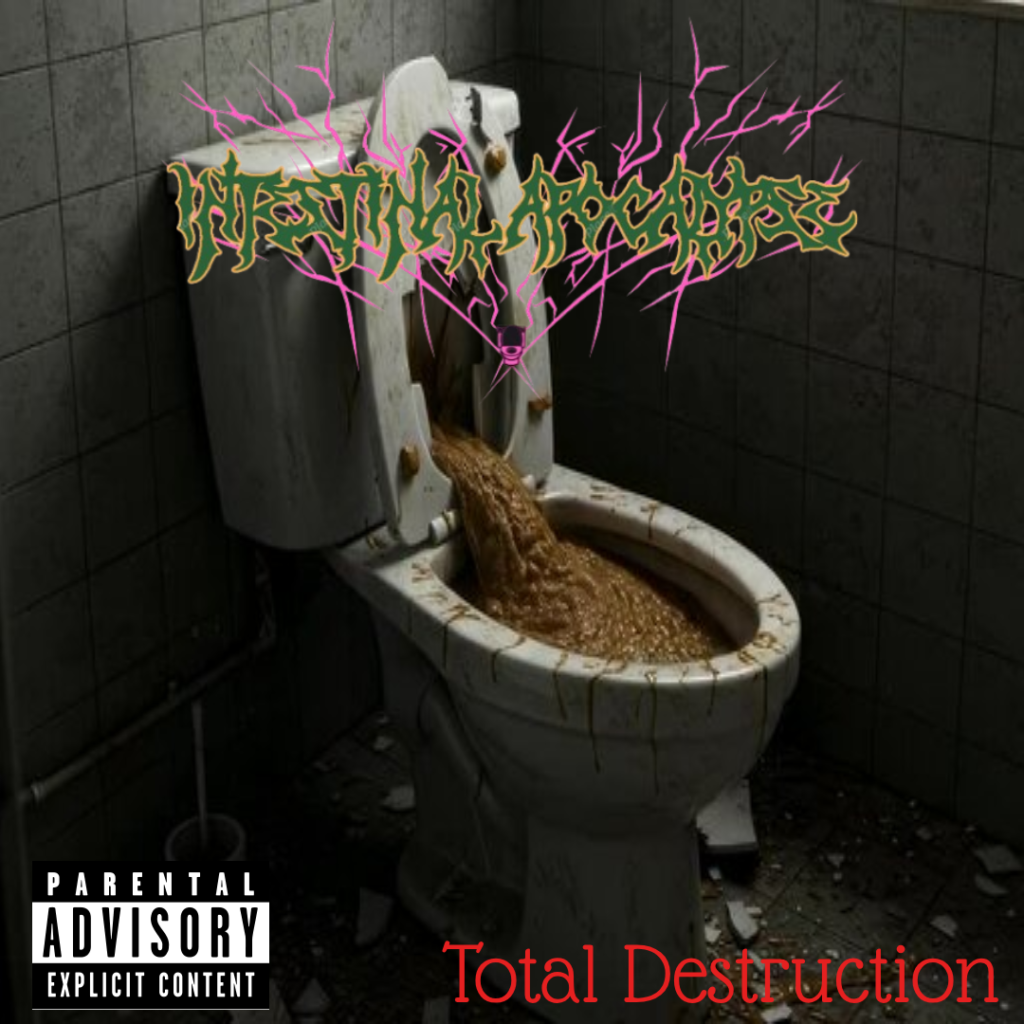
Rather than telling a single story, the record explored collapse from every imaginable angle. Ancient plagues collided with modern cities. Oceans swallowed kingdoms. Forests reclaimed civilization. Hunger, greed, disease, and psychological ruin intertwined beneath walls of crushing guitars and relentless percussion. Critics praised the album for its vivid imagery and uncompromising heaviness, while longtime fans recognized fragments of every era of the band’s history hidden beneath its brutal exterior.
The album was embraced throughout the underground extreme metal community. Longtime fans praised the band’s reinvention, while newer listeners discovered a group whose heaviest and most ambitious work had arrived nearly forty years after its formation. It wasn’t a commercial breakthrough but it proved that Intestinal Apocalypse still had something new to say.
Instead of celebrating their success by slowing down, the four musicians immediately returned to the rehearsal room. Ideas came faster than ever. Robert filled notebooks with lyrics inspired by colossal machines, failing civilizations, industrial decay, and the grotesque relationship between humanity and consumption. Paul pushed the music into even darker territory without sacrificing the band’s crushing groove. William and Daniel locked together with a chemistry that felt impossible after so many decades spent searching for the right rhythm section.
Before the dust had settled from Total Destruction, work had already begun on its successor.
The next chapter would be called Monument of Rot.
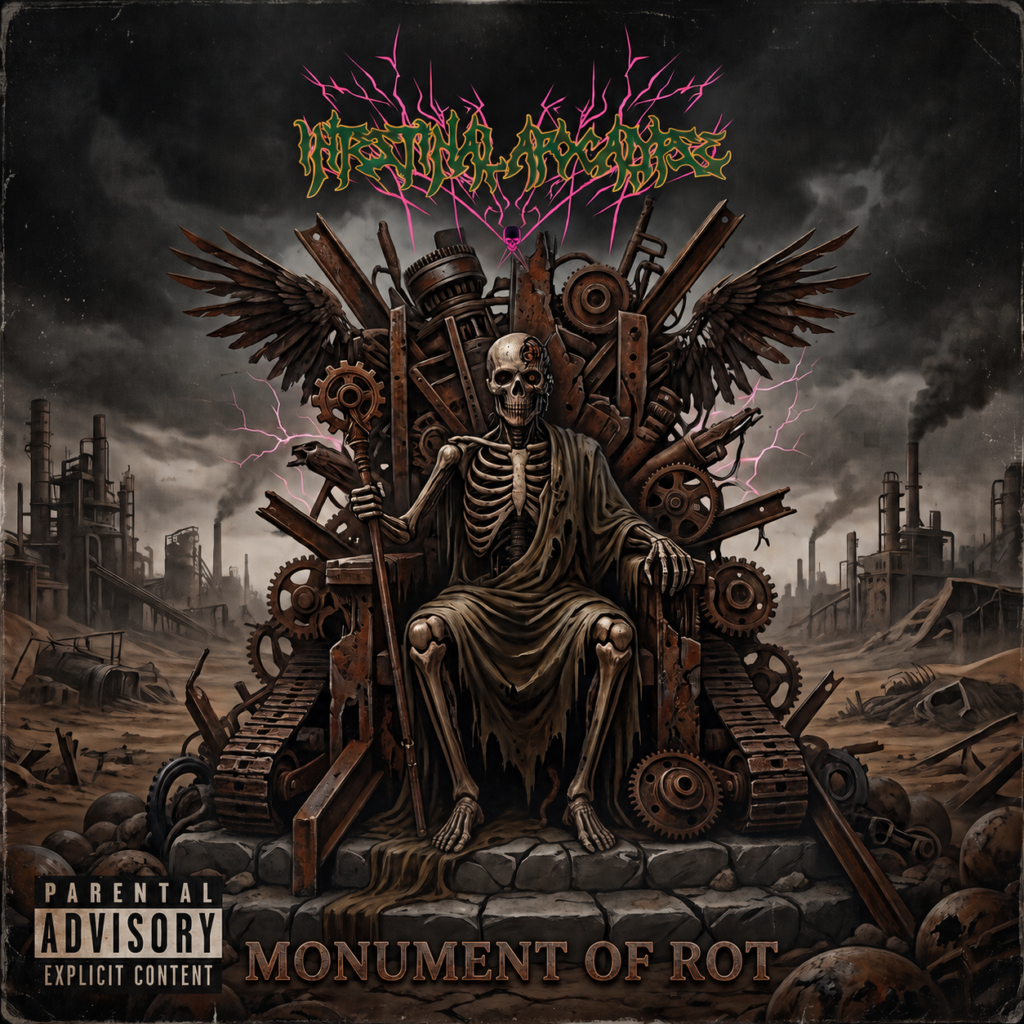
For a band born in a cluttered garage in 1986, every rehearsal still felt like the first one. The equipment had become better, the hair had become grayer, and the scars had become impossible to hide—but the hunger remained exactly the same.
Some bands survive.
Some bands endure.
Intestinal Apocalypse continues to evolve.
Present Day: The Forge Burns On
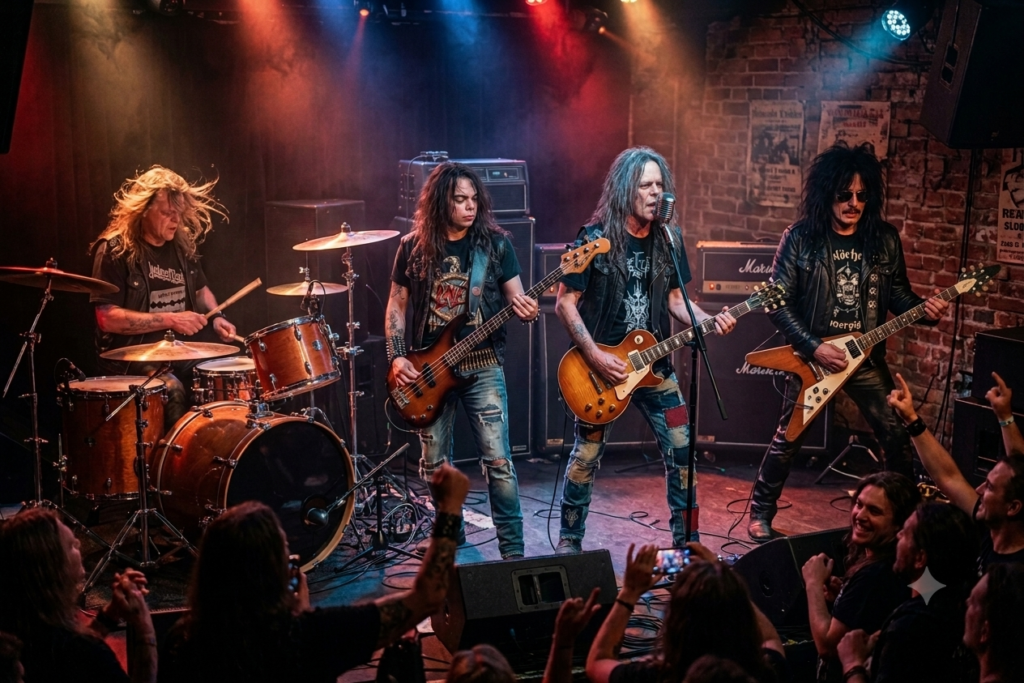
Today, Intestinal Apocalypse is an unstoppable machine. The scars of forty years in the music industry are visible: William wears a specialized brace on his wrist, Paul’s hair is entirely silver but you wouldn’t know it, and Robert’s voice has dropped into a gravelly, menacing baritone.
Yet, when the lights dim at major metal festivals around the world, the ferocity remains entirely undiluted. Daniel prowls the stage, his bass lines weaving flawlessly through William’s artillery-fire drumming. Paul stands at the edge of the monitors, eyes closed, peeling off blistering solos. And standing center stage, his guitar slung low over his shoulder, Robert lets out a roar that echoes out into the night, proving that what was forged in a 1986 garage was built to last forever.
